Rendering Chicken Schmaltz + Eating Cracklin

Rendering Chicken Fat (Schmaltz)
After you take the fat and skin from the chicken, you need to cut it into uniformly small pieces. I was worried mine weren't small enough but I think they were just right. I'd say about 1/2 to 1 inch pieces. This will be the most tedious part of the process and depending on how many chickens you're processing, you may not have enough to render right away. You'll need the fat and skins from three whole chickens to make about one cup of schmaltz. You can save the pieces in a freezer bag until you've collected however much you want.
I'm not sure if you could save the skins from store bought rotisserie chicken but it could be worth the try if you buy them on a regular basis and have no interest and bothering with raw chicken. It would definitely be dirtier than raw chicken so you'd need to purify it completely.
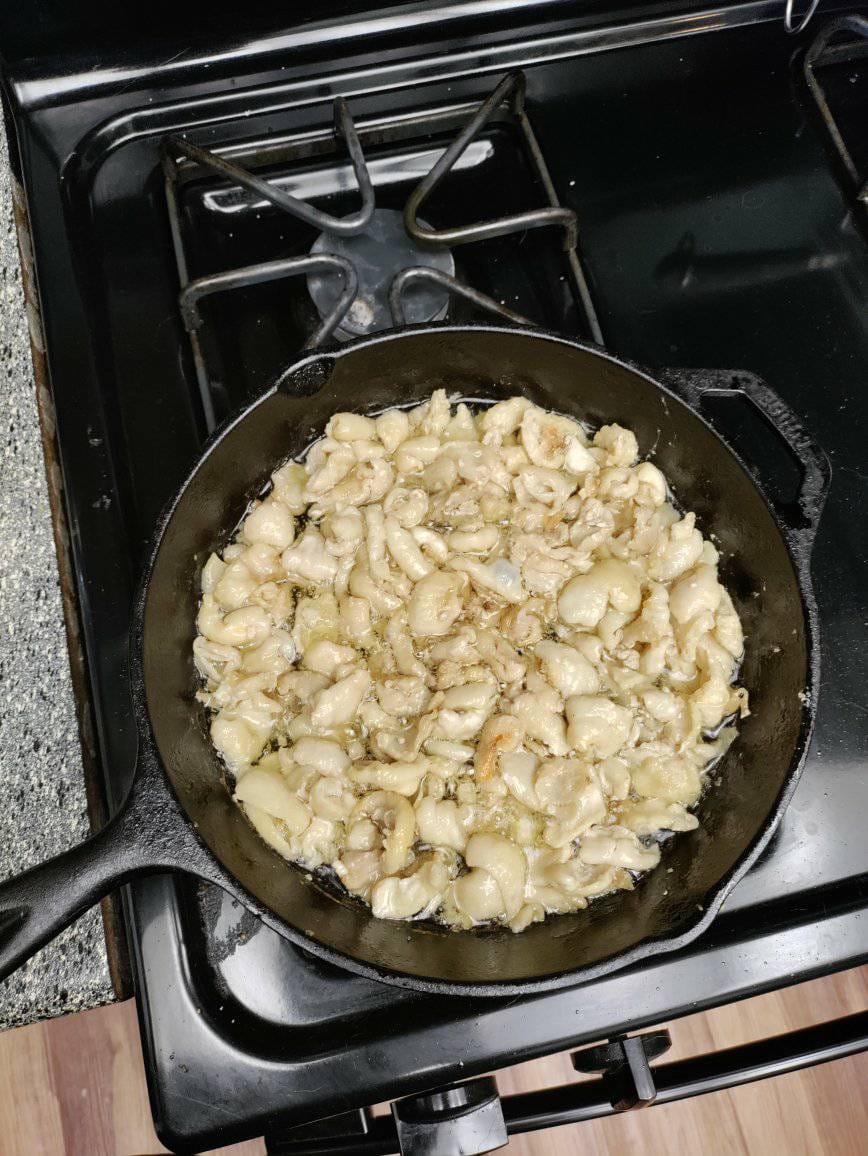
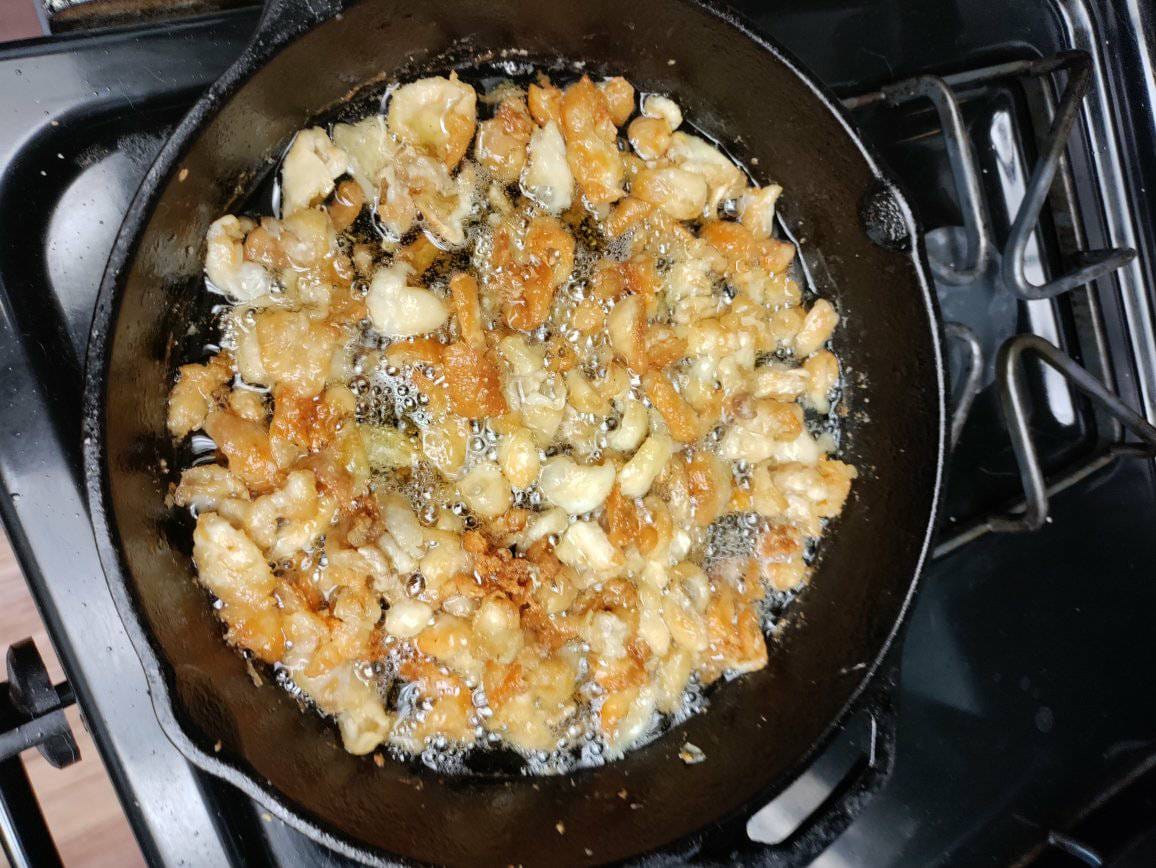
You put these pieces in a non stick pot or pan. Cast iron worked well with minimal sticking at the bottom. Then you fry it up on a steady medium heat. I stirred them around a few times. Some people add onion about half way through the frying process but I kept mine plain. If you're pieces are noticeably different sizes they won't cook at the same rate and you'll need to pick the smaller ones out before they burn.
Cracklin
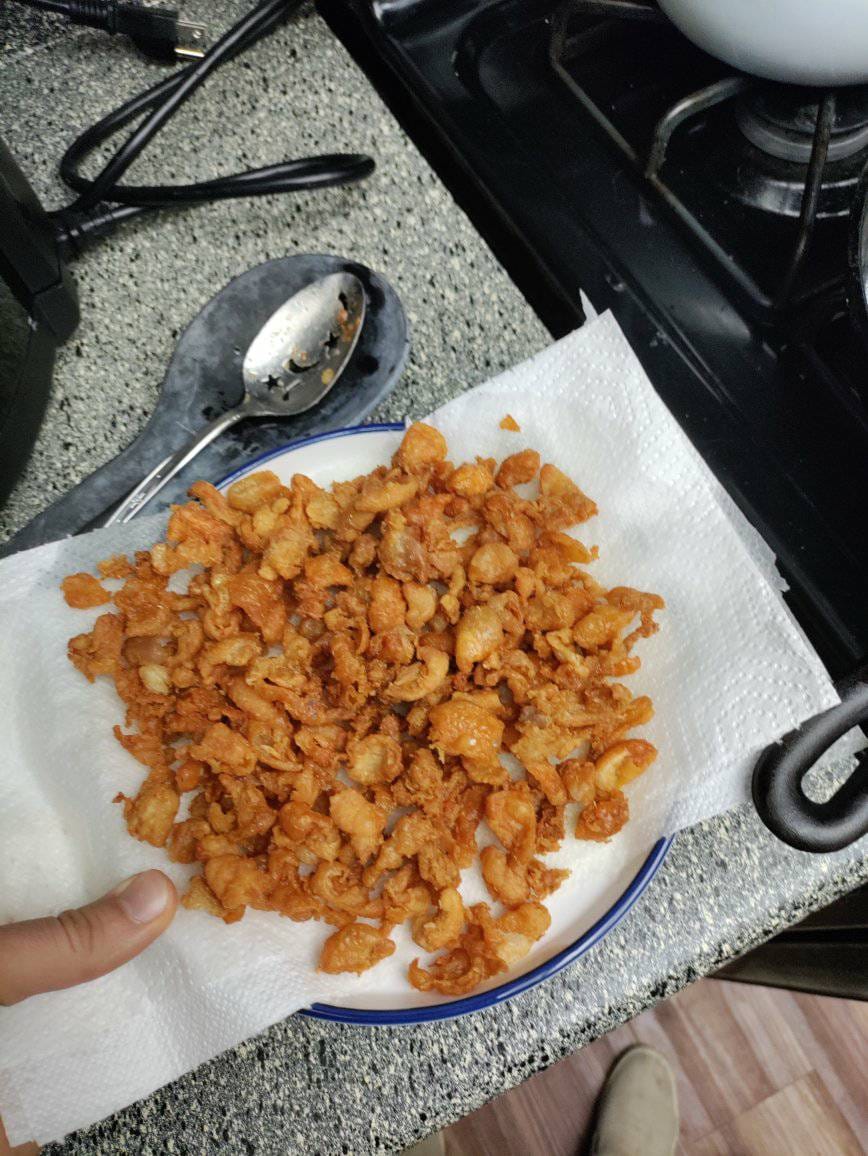
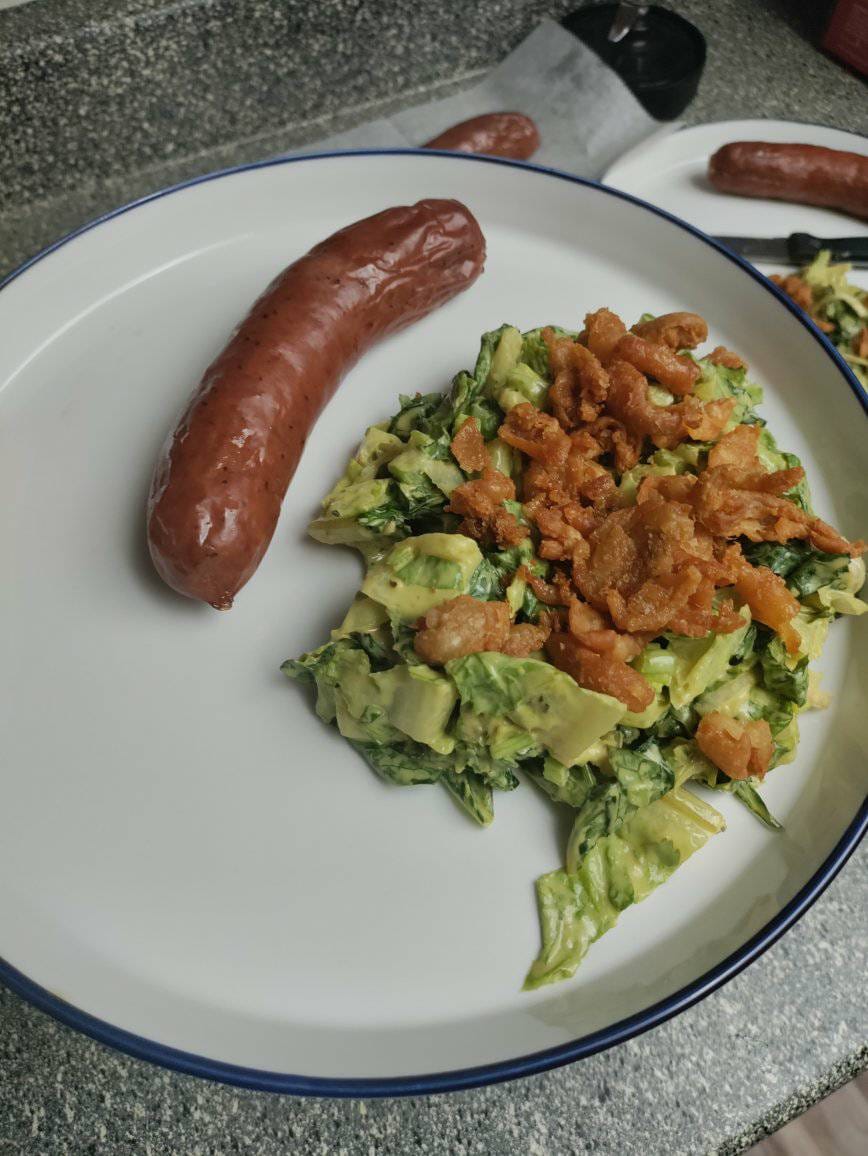
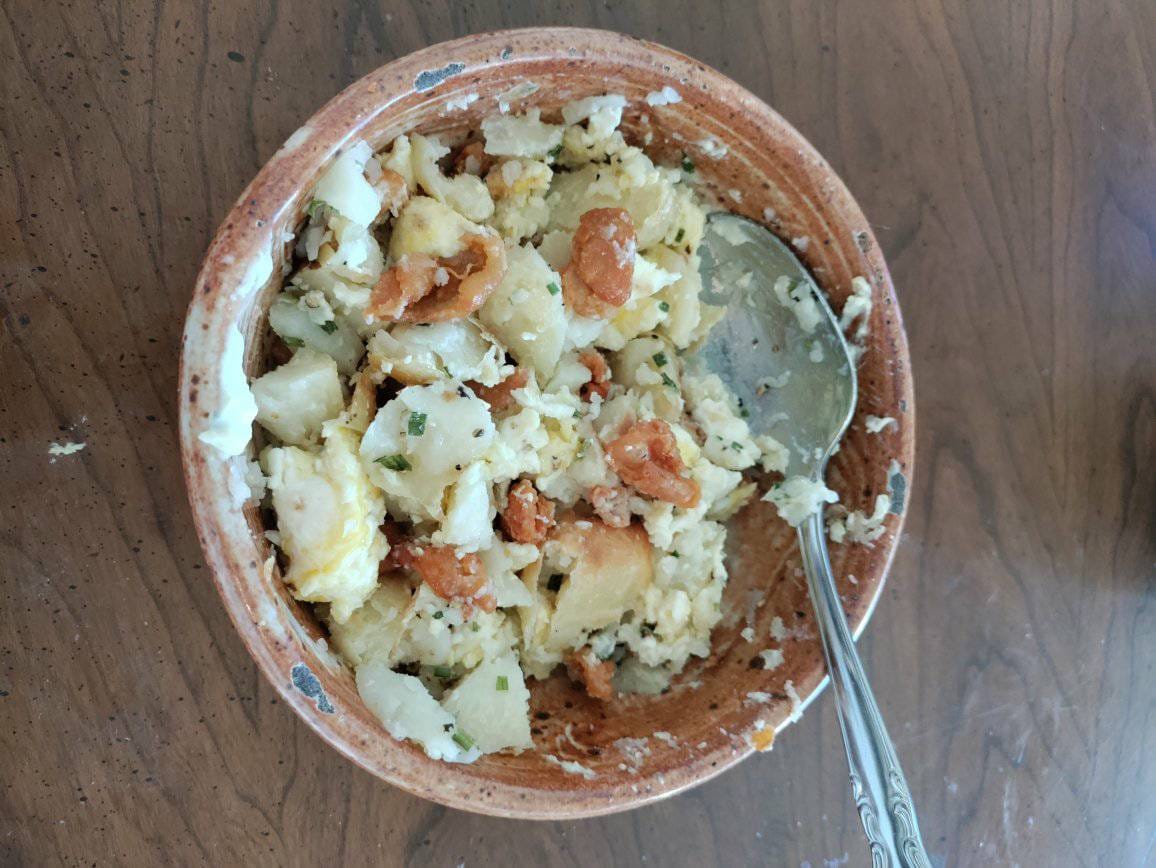
The crispy bits left over are called cracklin. I used them to top our salad at dinner. They could be good as a soup or ramen topper too, or as a crunchy addition to a burrito filling of some kind or topped on baked potato... pretty much anywhere you'd want to put those french fried onion bits (you know the one we all love to put on our green bean casseroles at Thanksgiving). I didn't think these cracklins would be shelf stable so I put them in a jar in the refrigerator and used the rest of them up the next day at breakfast.
I'll do a nutrition comparison of cheese and cracklin in my next post. Let me tell you, I was surprised at what I learned!
Purifying Chicken Schmaltz
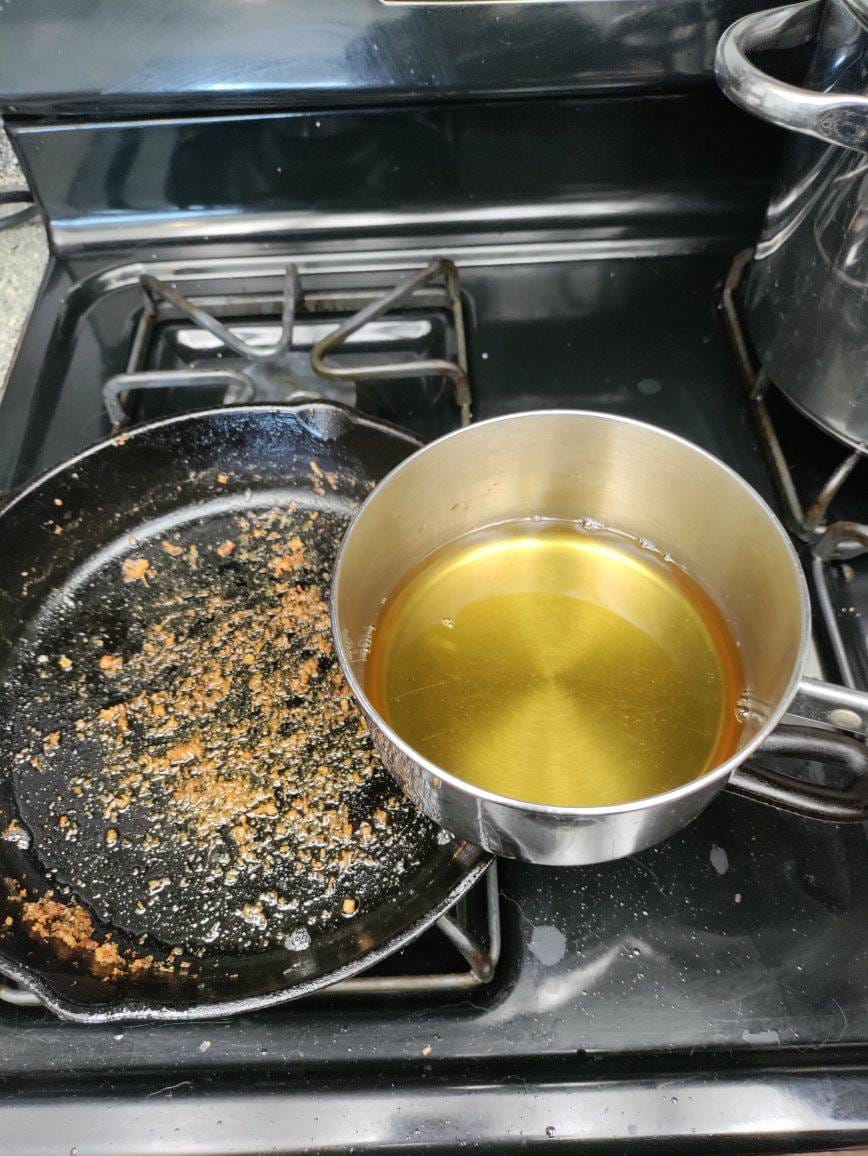
The fat that's left over is the schmaltz. There are a few ways to handle it.
For short term storage, you'll need to strain out the bits and put in jar after it's cooled. I recommend not pouring it all the way because tiny little bits will settle at the bottom. You could just pour that directly into whatever else you're cooking for the night. This is what I did, but next time I'll purify it properly.
If you want it to keep for longer you're going to need to make sure you thoroughly purify the fat. You can do this by:
1. Strain into a dish or jar. Let it cool until no longer liquid. You could monitor it to see when it gets to a safe temperature but I usually put my fat in the refrigerator and continue the process the next day. Next, add purified salt water and simmer in a fresh clean pot. The salt water helps to draw out water soluble impurities from the fat.
2. After heating the oil and water thoroughly it can be poured into a shallow bowl or other container and left to cool and solidify. It will not harden completely like tallow but will be like a soft spreadable butter. The shape of your container will effect how easy it is to do the next step, which is...
3. Scoop the schmaltz out of the bowl. Since I didn't do this exact method myself I can't say for certain how it will go but I do think you'll clearly see the water and fat separated and know which part to scoop. Discard the dirty water.
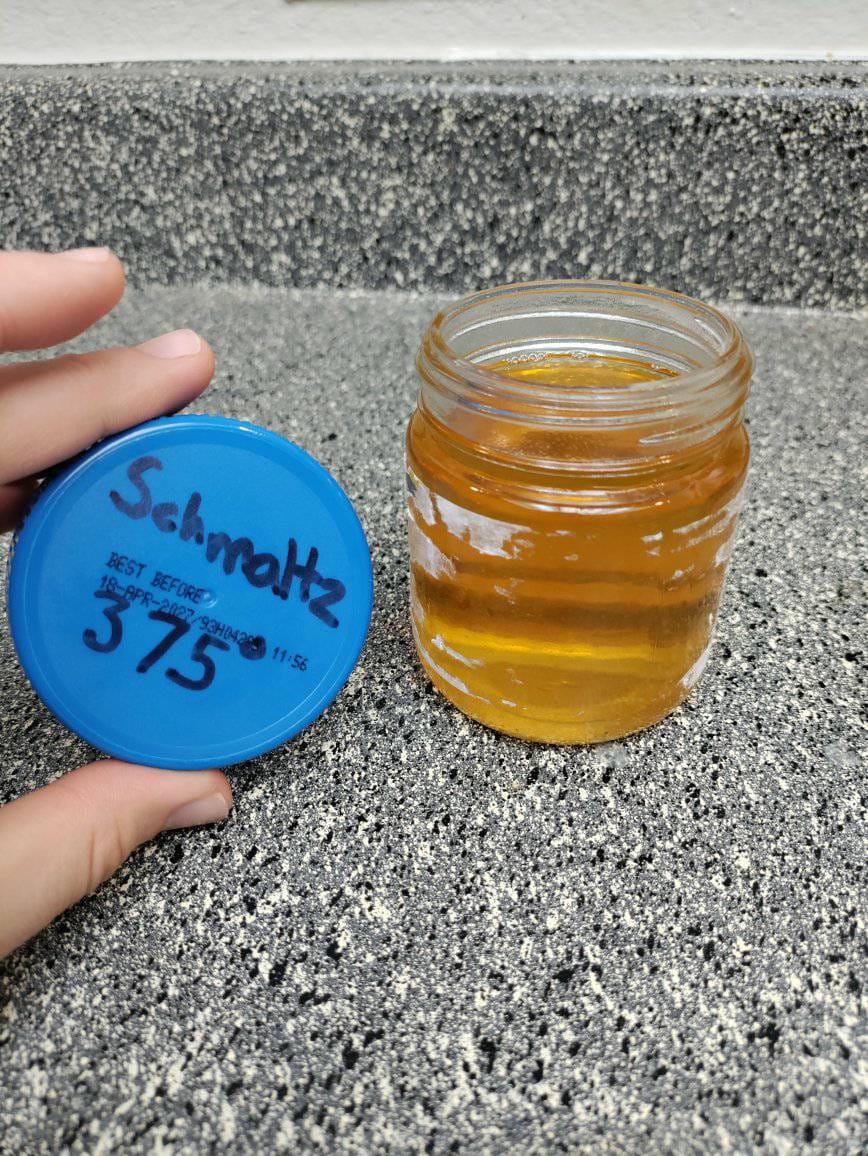
4. Melt down the now purified fat for easy pouring into your final storage container. Here is how I stored mine.
QUICK TIP BEFORE YOU MOVE ON!
I've tried two ways of straining thinking I could be clever and make this easier. I tried coffee filters thinking it would catch even the smallest particles and I could skip the water part but the fat simply did not go through and made a big mess. Stick with the fine mesh kitchen sieve and do the extra water step. Letting the particles settle with the water is by far the best method for getting the tiny tiny bits out.
Storage
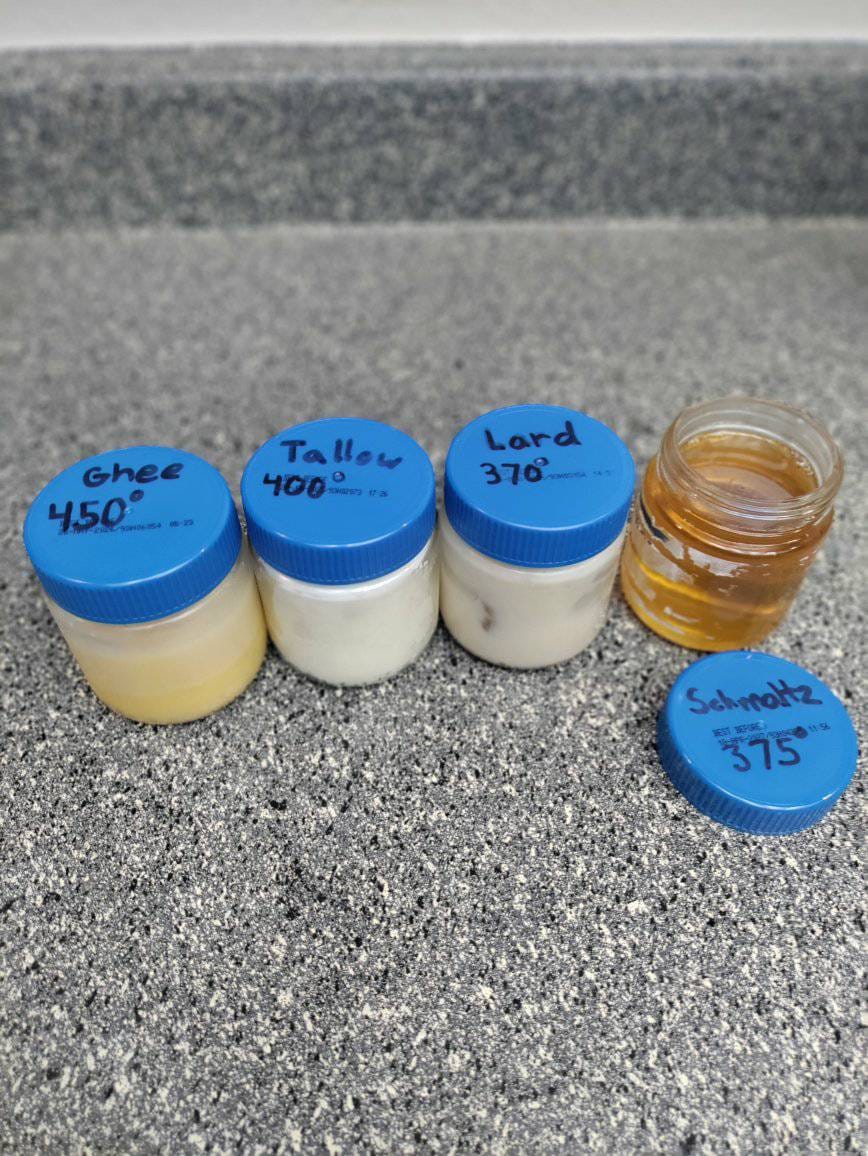
In this last picture you can see my collection of cooking fats. They make me happy when I see them all lined up in my butter drawer in the door of the refrigerator. I have rendered all of these fats myself. Schmaltz has been the most labor intensive one. I think next time I'll add onion and garlic, and maybe even rosemary, because if I'm going to all this work I think it should make a bomb flavor.
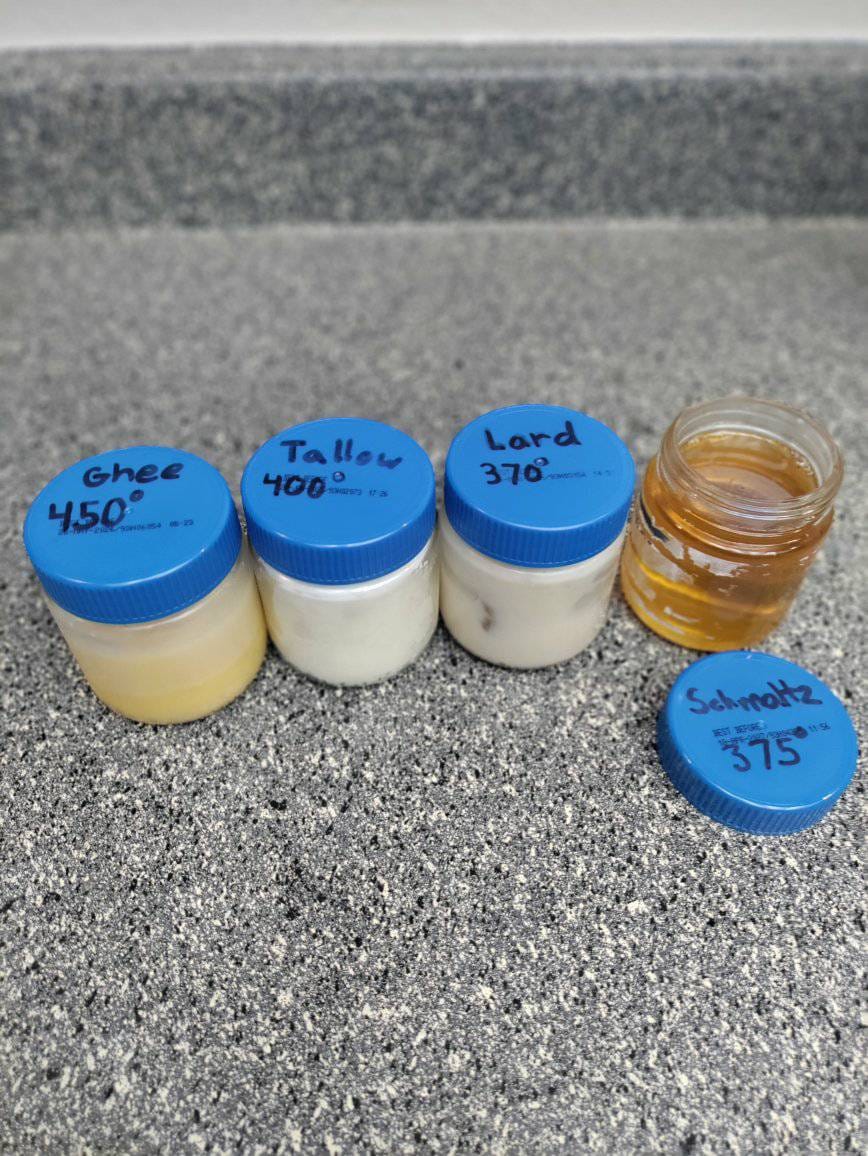
Each jar holds a bit more than 2/3 cups. maybe even 1 cup but I haven't measured it to be sure. The jars are old Wyler's bouillon cube jars which I used to use often.